Customer feedback
How to Write a Positive Review That Is Actually Helpful
A positive review becomes more useful when it explains what the business did well, what benefit you received, and who might value the same strength.
In short
To write a helpful positive review, go beyond “great service” or “five stars.” Name the specific behavior you appreciated, the benefit it created, and the situation in which that strength mattered to you.
Key takeaways
- Turn a positive adjective into an observable behavior.
- Explain the benefit you received, not only your level of satisfaction.
- Say who or what situation the business may be especially good for.
- Specific praise is usually more credible than declaring the business perfect.
“Great service” is positive—but the next customer still has a question
When an experience goes well, it is natural to leave a quick thank-you: “Amazing,” “Highly recommended,” or “Five stars.” Those reactions can be sincere, but future customers still need to know what made the experience good. Without that detail, positive reviews for very different businesses start to sound the same.
Turn praise into an observable confirmation
Replace a broad label with what the business actually did. “Very professional” might become, “They walked me through three options, explained the price differences, and did not push me toward the most expensive one.” “Friendly staff” might become, “They listened to what I needed, answered my questions, and never made me feel rushed.”
- What did the business do that stood out?
- What problem did that behavior solve for me?
- When in the experience did I notice the strength?
- Who else might value the same benefit?
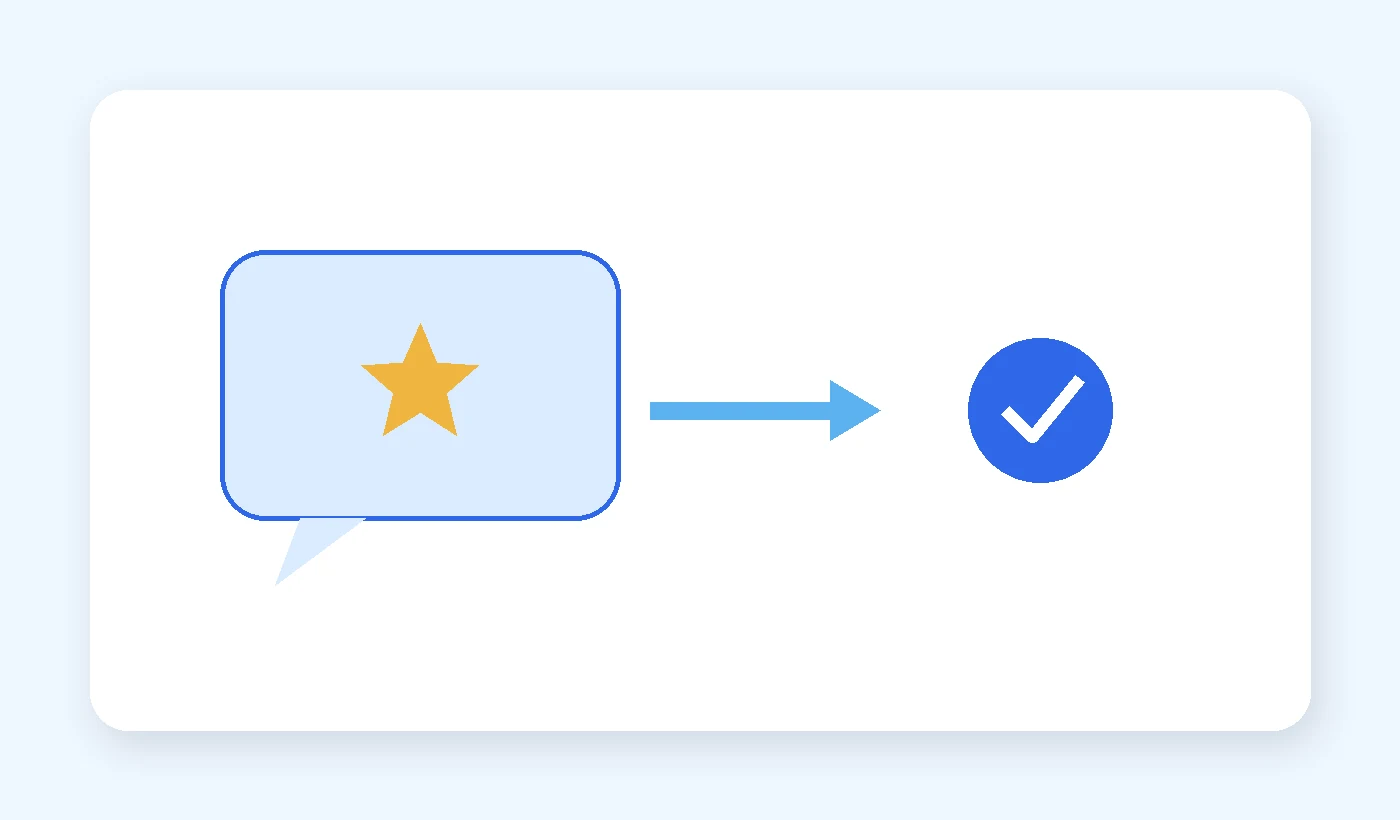
Name the benefit, not only the quality
Customers do not buy “professionalism” as an abstract word. They benefit from what professionalism creates: lower risk, clearer decisions, less wasted time, more confidence, or better follow-through. When your review explains the outcome, another customer can understand why the same strength might matter to them.
Explain when you would recommend the business
“I recommend them to everyone” sounds enthusiastic, but it is not very selective. A more useful statement is, “I would recommend them to someone who wants to understand the trade-offs before buying,” or, “They were a great fit for us because predictable turnaround time mattered.” That helps future customers recognize whether their priorities match yours.
You do not need to turn gratitude into perfection
A positive review does not have to claim that every part of the business is flawless. If one element was ordinary and another was exceptional, focus on what genuinely deserves recognition. Praise often becomes more trustworthy when it sounds proportional to the experience rather than promotional.
Why Number1s connects positive feedback to specific strengths
On Number1s, a positive rating is attached to a strength the business has chosen to put forward. That turns approval into a more interpretable signal. If many customers consistently recognize the same behavior over time, a person looking for that benefit gets evidence that is closer to their actual decision.
You still do not need to write a long review. One precise sentence—such as “They called me the next day to make sure the issue was actually resolved”—can say a lot about follow-through and after-sales support.
The most useful positive review does not only say that you were happy. It explains what made you happy.
What is a good example of a positive review?
A useful positive review connects a behavior to a benefit, such as: “They explained the options clearly, including the trade-offs, and helped me avoid buying a solution that was more complex than I needed.”
Do I have to give five stars when I am satisfied?
Your rating should reflect what you actually experienced. Number1s does not ask customers for a maximum score; it asks them to evaluate specific strengths honestly.
Can a short positive review still be useful?
Yes. A specific sentence can be more informative than a long generic review if it explains what happened and why it mattered.